Showing posts with label extracting. Show all posts

Wednesday, August 19, 2015

A Honey of a Harvest


A year ago I wrote about extracting honey from the hives at the college with my friend Hugh. In July we did it again, with a few more helpers including my niece Crys from Aurora, Colorado. I will say that Crys spent more time sitting in the shade than she did playing with the bees, but she was there and was a good sport! The best part of the day was that, after everything was cleaned up, we got to take the extractor and some tools home with us for our own harvest!

Our two beautiful hives of honey bees were ready to be robbed. We were just days away from our first harvest and we were ready. We had all the tools we needed and we had all the people power we wanted, two of us and the dog.

4-frame extractor

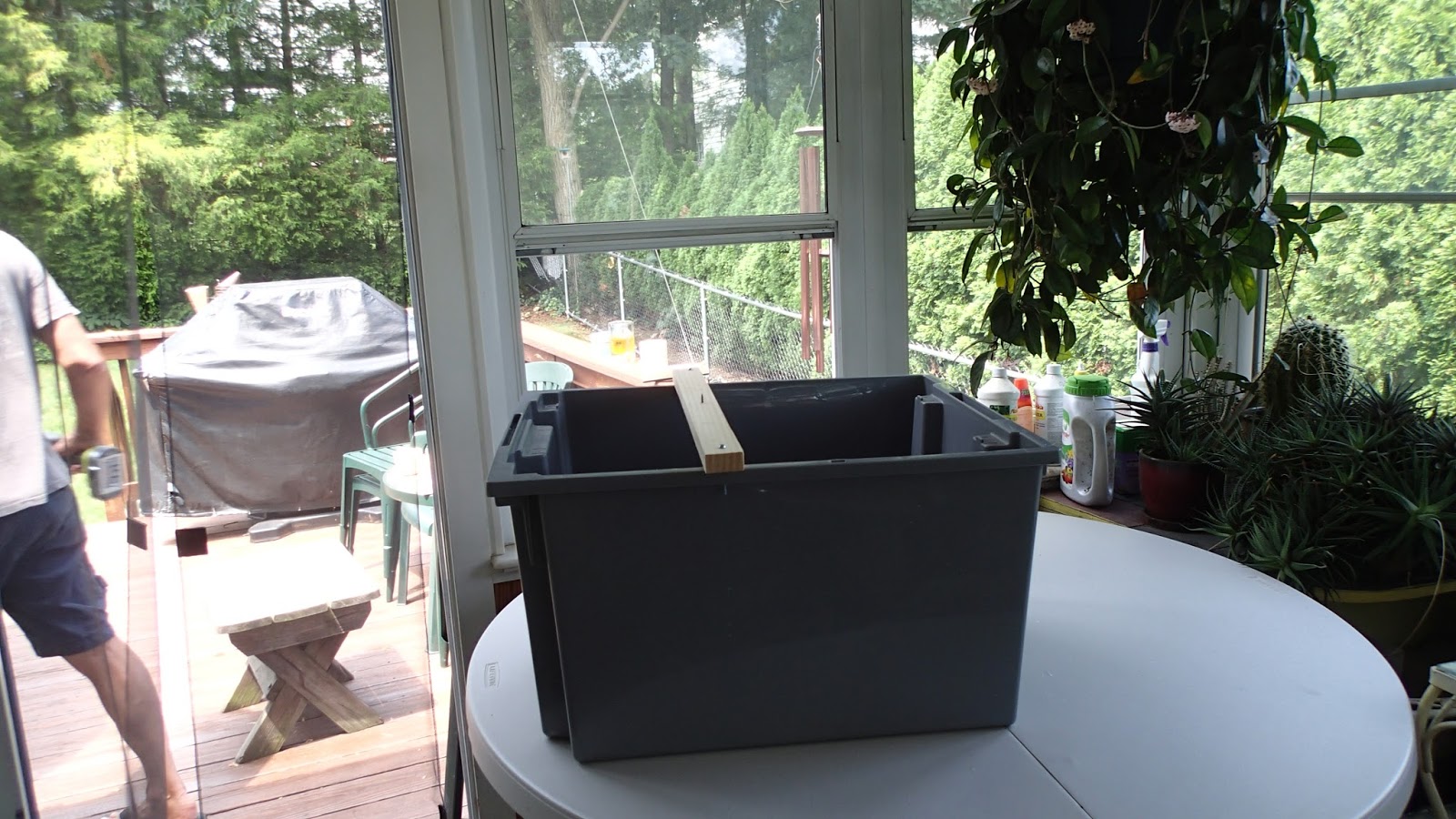
bucket with gate and lid

 
uncapping tray

On Friday we put the bee confuser on the hives. It is really called a bee escape board and it allows the bees to leave the honey frames but they can't get back in. The fewer bees in the honey frames when we take them off, the fewer bees in the house, in the honey and in my hair. I have vivid memories of my Dad taking honey frames and using a brush to push the bees away. He did his extracting in the cellar of our house with bees flying everywhere and yes, they did manage to get into the house on a regular basis.

We put the honey supers into big plastic containers with covers and brought them to the side yard. We brushed away any straggling bees and brought the frames into the sun room. Using a heated knife, we scraped the cappings off the frames and collected that wax and honey in the capping bucket. Once we had 4 frames open, we put them into the extractor for spinning. The extractor is a centrifuge which is spun by hand. The honey comes flying out of the frames and collects on the bottom.

Jim and the hot knife uncapping the frames
We had a total of 16 frames from the two hives. In 3 hours we had uncapped, extracted and filters 48 pounds of pure beautiful honey. Of course, the entire room was sticky and we were sticky but we were really excited about our first harvest.


We let the honey sit for a day in the bucket and then we put it into .5 pound and 1 pound jars, ready to sell or gift. We are very proud of ourselves for keeping a hive alive through the winter, managing a second hive and getting both hives in shape to produce. We are very proud of our bees too!

Buddy & Jim bottling
beautiful wildflower honey

We are selling it locally. If you are interested in buying some McBees Bergen County Wildflower Honey. please send me an email or a message. We aren't shipping it anywhere because that doesn't make sense to us. so here is our label, created by DeepCereal.


Sunday, July 20, 2014

Honey, Honey, Honey, Honey......Honey

This week, I had my first hands on experience with harvesting honey. With all the years that my dad had honeybees, you'd think I've had tons of hands on experience. But no. I'm pretty sure my dad used the bees as his special place to escape all that comes with a family of 8 kids so we never actually were involved with bee work.

At my workplace, there are 2 beehives in a meadow right at the front of the campus. The meadow with all its wild flowers looks like a tiny slice of paradise as you drive into campus. The beehives just add something extra special. The groundskeeper is a novice beekeeper. He's been at it for 3 years. Last year, with 1 hive, he got 60 pounds of honey.

The Meadow
The day before the harvest, Hugh went to the hives and inserted an escape screen under the medium honey supers. The screen allows the bees to leave the supers, but not get back in. The bees do not get hurt by this, they just get confused for awhile. This is helpful because a beekeeper does not want to remove a super full of honey and bees. The bees should stay with the hive as much as possible. Also, a super full of honey weights about 60 pounds. Add a few pounds of bees and this becomes too heavy to lift.


Escape Screen
 
The day of the harvest, we met up and began to set up. A couple of tables are needed. One is used for the uncapping process and one is used for the jarring process. Uncapping is the term for opening up the honeycomb so the honey can be removed. If you are a fan of comb honey, you have eaten both the wax, in small chunks, and the honey. Not everyone enjoys chewing wax which is why honey gets removed from the comb. For each frame of honey, the caps are either sliced off with a hot knife or poked open with a spiky tool that looks like a paint roller.

Between the two tables is the extractor. The extractor is  a big aluminium or plastic tub on feet with a drum inside where the open frames sit. On the lid is a handle which turns a crank which spins the drum inside. Think of a salad spinner. It works the same way. The centrifugal force moves the liquid honey out of the frame and leaves the solid wax in place. The honey falls to the bottom of the tub. The frames come out and get put back into the supers for the bees to refill. The extractor also has a capped spout at the bottom so the honey can be poured out.

The extracted honey gets poured into a 5-gallon container with a strainer on the top to remove any wax or bees or other stuff which may have gotten into it. My dad used to call this strained stuff "slum gum". The container also has a capped spout at the bottom and that is how the jars are filled. Simple process from hive to jar in just a few hours. We extracted for about 3 hours and got about 100 pounds of honey. Community College bees sure work hard!