Showing posts with label beekeepers. Show all posts

Wednesday, August 19, 2015

A Honey of a Harvest


A year ago I wrote about extracting honey from the hives at the college with my friend Hugh. In July we did it again, with a few more helpers including my niece Crys from Aurora, Colorado. I will say that Crys spent more time sitting in the shade than she did playing with the bees, but she was there and was a good sport! The best part of the day was that, after everything was cleaned up, we got to take the extractor and some tools home with us for our own harvest!

Our two beautiful hives of honey bees were ready to be robbed. We were just days away from our first harvest and we were ready. We had all the tools we needed and we had all the people power we wanted, two of us and the dog.

4-frame extractor

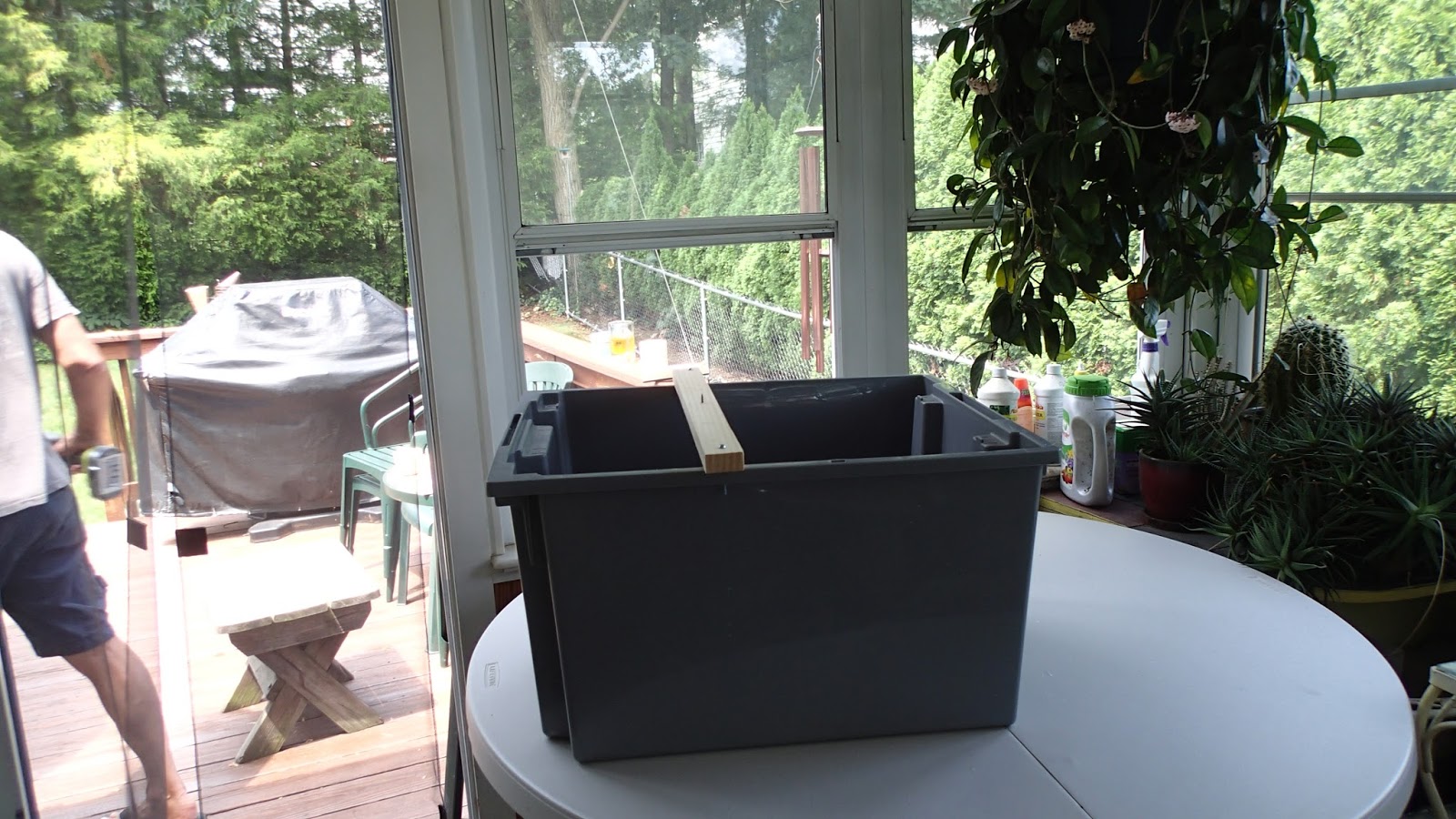
bucket with gate and lid

 
uncapping tray

On Friday we put the bee confuser on the hives. It is really called a bee escape board and it allows the bees to leave the honey frames but they can't get back in. The fewer bees in the honey frames when we take them off, the fewer bees in the house, in the honey and in my hair. I have vivid memories of my Dad taking honey frames and using a brush to push the bees away. He did his extracting in the cellar of our house with bees flying everywhere and yes, they did manage to get into the house on a regular basis.

We put the honey supers into big plastic containers with covers and brought them to the side yard. We brushed away any straggling bees and brought the frames into the sun room. Using a heated knife, we scraped the cappings off the frames and collected that wax and honey in the capping bucket. Once we had 4 frames open, we put them into the extractor for spinning. The extractor is a centrifuge which is spun by hand. The honey comes flying out of the frames and collects on the bottom.

Jim and the hot knife uncapping the frames
We had a total of 16 frames from the two hives. In 3 hours we had uncapped, extracted and filters 48 pounds of pure beautiful honey. Of course, the entire room was sticky and we were sticky but we were really excited about our first harvest.


We let the honey sit for a day in the bucket and then we put it into .5 pound and 1 pound jars, ready to sell or gift. We are very proud of ourselves for keeping a hive alive through the winter, managing a second hive and getting both hives in shape to produce. We are very proud of our bees too!

Buddy & Jim bottling
beautiful wildflower honey

We are selling it locally. If you are interested in buying some McBees Bergen County Wildflower Honey. please send me an email or a message. We aren't shipping it anywhere because that doesn't make sense to us. so here is our label, created by DeepCereal.


Thursday, June 18, 2015

Here's to you Dad!

A swarm of bees in May is worth a bale of hay

A swarm of bees in June is worth a silver spoon

A swarm of bees in July, just let them fly! 


This is a rhyme that most beekeepers know. Apparently, it comes from the mid 17th century and puts a value on catching a swarm if you see one. If you can catch a swarm in May or June, you'll be able to have a harvest and keep the bees alive through the winter. If you find one in July, there isn't enough time or food to keep the hive going so you shouldn't bother collecting it. 


As a kid, I often went with my Dad to collect swarms of bees when he got a call. I got to be his helper and hand him his tools or tell people to step away from the swarm. He was on the State Police call list and was pretty busy in May and June. He drove a yellow Volkswagen Beetle with a Mr. Bee license plate. He pulled a small trailer behind full of swarm catching stuff. I remember that he always had a deep super with a top and bottom, a white sheet, his smoker and some burlap, his hat and veil. Wherever there was a swarm there would be a crowd of people to watch and comment.


He was very calm and talkative while he figured out the best way to get the swarm without hurting the bees or any of the people around. He was really patient with the questions-
  • Do they bite?
  • Have you been bitten?
  • Where is the honey?
  • Are you going to kill them?
Catching a swarm was the way Dad increased the number of hives he had. We always had 10-12 hives in our back yard and he had hives at his parents' house and in several apple orchards around town. He did order bees in the Spring, but mostly he increased his have count by catching swarms.


One time, there was an article in the New York Times about him called "The Queen wore polish and laid eggs". The article profiled his appearance at the local public library where he brought an observation hive and all sorts of beekeeping tools and spoke to a group of people. The article quotes my sister who said she thought of the bees as pets. That's true! Dad would find drones and bring them to us to play with.


Dad was very protective of his bees. We had to save them if we found them floating in the pool and he'd get upset if we got stung, not because we got hurt but because a bee died! One sister tried to help the bees by putting some daisies into the hive. Nice thought but this did not turn out well for her. She got stung many times and had to go to the emergency room.


We even had bees living in our house between the outside and inside walls of my brothers' room. You could put your ear to the wall and hear them buzzing. You could see them coming and going from a small space at the roof line. Dad just left them there. He didn't want to remove the wall to take them out. I think he enjoyed having them living in the house along with his family.

My sister tells me she was with him one time when he retrieved a swarm from a golf course. The golfers were all standing around watching him and waiting to play through. One golfer asked him what enjoyment he got out of playing with stinging bugs. He responded that he got as much enjoyment as the golfer did chasing little white balls around.


My family has dozens of bee stories and bee memories. Funny how it took me so long to decide to follow in Dad's shoes but here I am. Maybe one day I'll drive a yellow VW Beetle with a small trailer on the back full of bee equipment. 

Monday, June 1, 2015

What the heck is that? Or that? A look inside the hive

The hives are looking good from the outside. Bees flying in with pollen bags full. The first hive (now called '14) has a honey super on. The other hive (now called '15) is settling in to its new home. time to take a look inside.

We donned our suits, lit the smoker, gathered our tools and went inside the hives for a closer look over Memorial Day weekend. The weather was just right...sunny, not too hot or muggy....and the bees looked very busy.

Right away we found some beautiful capped honey in '14. The honey is light in color because of whatever windflower nectar the girls brought home. Now we're really looking forward to harvesting!

Looking beautiful!

Then we began to see some other things that we didn't recognize. We did see capped and uncapped larvae, brood, worker bees, drone bees and many drone brood. We didn't see eggs while in the hive but we think we see eggs in the pictures. It is hard to tell the difference between an egg and light glare.

Drone brood on the left, brood, larvae and maybe eggs on the right.
Other things we saw and can't identify-

This looks like a bunch of drone cells stuck together

Here is a queen cell and the arrow shows a drone cell

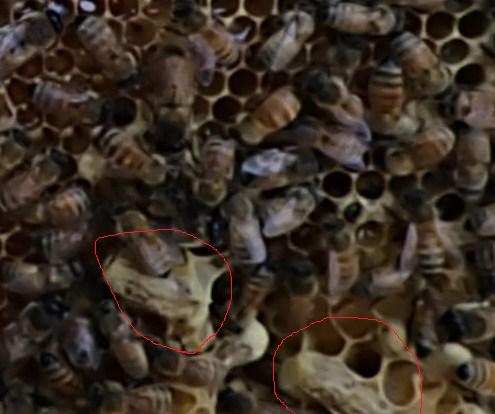
These lumps are on the bottom of a frame and seem to include drone cells and queen cells


Two more queen cells

We've been watching the '14 closely for any kind of weird behavior. The hive has been a bit grumpy with groups spending time outside on the landing board and there are a lot of drones around. Just a couple of days ago, everything changed. The hive seems calmer and more in control of itself. We didn't see a swarm so we don't know if there was one or if there was a queen death and replacement or what happened. Any thoughts from more experienced beeks would be greatly appreciated.

I'm wishing I could give my Dad a call and get some old time beek advice!


Thursday, April 30, 2015

Just adopted about 20-thousand more daughters!

Really! It is true! I now have two daughters, two grand-daughters and about 50-tousand bee daughters. Thank goodness for a husband, a grandson, two sons-in-law and a male dog to add the testosterone to the family!

Last week we picked up our nucleus hive and brought it home. Our club had taken nuc orders and the truck arrived on Wednesday with a delivery of 150 nucs! We brought it home, set it in the yard next to the first hive, opened the door and promised the girls we would move them into their new house the next day.

Nuc waiting to be housed

Installed and flying happy!
The nucs came to us from Grant Stiles, a NJ beekeeper and bee business person, so they are native to the state and relatively local. Other club members and long time beekeepers swear by the quality of the bees they get from Grant so we were happy to be able to get some for our own.

Well, of course, it was cold and rainy and snowy the next day so they had to wait. Then we had freezing temperatures overnight so they had to wait again. Finally on Saturday it was sunny and warm and we were able to put the nuc into its official permanent home.

It was fun to inspect the frames in the nuc and try to find the queen. We always take pictures of each frame so we can more closely inspect them later. I'm happy to say that we had eggs, capped and uncapped brood, pollen, nectar and the queen!


Caught in the act of laying an egg!


Saturday, April 25, 2015

It's Alive! We made it through the winter!

What a tough month February was around here! snow, snow, snow and freezing temperatures had us really worried about the bees making it through.  We had seen them out on a few sunny days in January and then BAM! February arrived and didn't let up.

The hive had been wrapped in insulation on the north and west sides and we kept the doorway free of snow and ice and added an entrance reducer to help keep the chill out. We started feeding the bees sugar fondant (bee candy) because it can be quickly placed on top of the frames, close to the cluster of cold, hungry bees and their queen. We actually made our own fondant because we didn't want to wait for an order to arrive. See how to do that- http://www.honeybeesuite.com/how-to-make-fondant-from-table-sugar/

On Feb. 22, we breathed a sigh of relief when we the sun came out, the temperature went up a bit and we saw bees flying! They were taking cleansing "poop" flights and bring out the dead and coming out just to stretch their wings. We were very proud bee parents! Our first hive had made it thought its first winter!  We have talked with may beekeepers since February and learned that we were very lucky. Many hives were lost this winter even though the beekeepers did everything possible to help them along.

Cleansing flights Feburary 22, 2015


We kept up with fondant feeding into March and then, at the beginning of April we were brave enough and the temperatures were warm enough to go into the hive for a quick inspection. The bees had not only taken to munching on fondant, they had discovered their own warehouse and were eating honey they had put aside. Some of them were venturing further from the hive in search of water. Take a look at these girls, finding snow melt on our back deck.


So here we go, into our second year as beekeepers with hopes of honey and pollination and good stewardship!

Sunday, January 11, 2015

Jars and Labels and Packaging.....Oh My

For as long as I can remember, my Dad's honey label was the same, yellowish with brown text with his name and a space for the weight. At some point, he added a small label to the back of his jars explaining about granulation and how to fix it. He also used the same classic jars in various sizes and the plastic honey bear container.  

 
 Nothing fancy because my Dad was a classic New England Yankee. His label clearly says "Here's honey which I put in a jar. It is pure and it weighs 1 pound. What you see is what you get." I can still picture the full jars on the kitchen table, lined up for labeling back in the days before self-sticking labels. Everyone in town probably had one of these jars in their kitchen and they would return the empty jars to him for refill.
 

He added the back labels when he got tired of listening to people tell him that their honey "went bad" and turned to sugar. Honey does not go bad. In fact there is documentation of honey found in ancient tombs and it was still edible. Read this article from Smithsonian Magazine- The Science behind Honey's Ancient Shelf Life for a real explanation.

All the bee supply vendors sell labels. Some can be customized with your own apairy name, type f honey (wildflower, raw, pure ). Most are generic and have blank space for the weigh and type of honey. Labels can also be custome designed and created. It all depends upon what you, the beekeeper, want to say. Take a look at Google images for an idea of just how many honey labels there are- Honey Labels.
This past fall, my club, Northeast New Jersey Beekeepers Association, held a honey label contest. Club members submitted their labels and other club members voted on which they considered to be the best, most interesting, etc. the label designs were interesting, as were the choices for winners. Winning entries were- J First place, I Second place and A Third place.

Northeast NJ Beekeepers Association Sept. 2014 Label Contest
 
I've been pondering my packaging and my labels. What do I want my brand to look like? First, I'm not really looking to have a brand nor do I expect to have a honey crop large enough for world-wide recognition. I love the traditional, glass jars used by my Dad so that decision has been made. I also like the idea of clear labels so you can see through the jar and through the honey.
A talented artist that I have know for her entire life has created various labels for me to use. I'm not going to share them with you now because I am not yet sure which I like the best. I also don't want anyone to borrow my label and use it for themselves! I can tell you that she does some really interesting art which you can see at her Etsy Store-DeepCereal. Her work has a sense of whimsy that I really like and it isn't too serious.

So, while my bees rest up in their hive, I'm busy getting ready for spring and my 2nd hive and thinking about jars and labels and packaging as well as extracting and swarming and bee stings.

Happy January!


Sunday, December 28, 2014

Updates and Plans for 2015


*So it has been warm this Christmas week in northern New Jersey. Bees have been flying here and around the state. Some have been bringing in pollen. Others have been house cleaning.....removing dead bees, stretching their legs and wings, pooping. Yup....they do that too!


Dec. 27, 2015


*The beginning of a new year means new calendars. One of my girls has become a calendar girl. Jim's photo of a honeybee in a cucumber flower was chosen by the New Jersey Beekeepers Association to appear in the 2015 calendar. She's on the May page.


NJ Beekeepers Association 2015 calendar
 
*All the experienced beekeepers and the books say winter is the time to catch up on reading bee literature and to plan for the spring. So that's my plan. In preparation for Spring, we are putting together supers and frames for a second bee hive, getting honey supers in shape and thinking about planting bee friendly flowers. In anticipation of a honey supply, I am investigating types of jars...glass, plastic, size, shape.....there are tons of choices and I'm deciding on a label style for the McBees.

Happy New Year everyone!


Sunday, November 30, 2014

Ask two beekeepers a question about bees and you'll get at least 3 different answers. That's the lesson we learned when we attended the October meeting of the Northeast New Jersey Beekeepers Association. The agenda indicated that there would be information about over wintering hives. this is knowledge we definitely needed so Jim and I went to the meeting.

An internet search for "overwintering bees" turns up 180,000 results. It is important that your search include where you live because not everyone will have a problem with snow, wind and very cold temperatures, all of which are a problem for bee hives. I added "northern New Jersey" to my search and got a better results list but I still wanted to hear from real people with real experiences. I had consulted my go to books and read bee magazine articles but there is nothing like personal experience to help guide the way.

Like many of the meetings, there was no formal agenda, just lots of sharing and discussion. One member swears by solid bottom boards and wrapping the hives in tar paper. Another member leaves the bottom board open, installed something called a slatted bottom board and does not wrap the hives. Others pile bales of hay around the hives. Others insulate the lid to help with moisture condensation which can drown bees. There is at least one member who tries very hard to replicate nature with his hives and he asked how bees in the wild survive winter without human intervention. Hmmmmm....no exact answers, lots to think about, and not a lot of time until the weather turns cold.

As I listen, I thought back to when I was  kid and tried to remember what my dad did with the 10 or so hives that lived in our back yard. They were not visible from the house, so I don't have any recollection of what they looked like in the winter. I'm pretty sure he got bales of hay to help block the wind. I know he would check the hives anytime there was a warm day and he would sometimes feed them with sugar water in front feeders. I also remember that not all the hives would make it through the winter and that would make him very sad. OK. I don't want to be sad in the spring. time to take some action to help the girls overwinter.

So here's what we did:

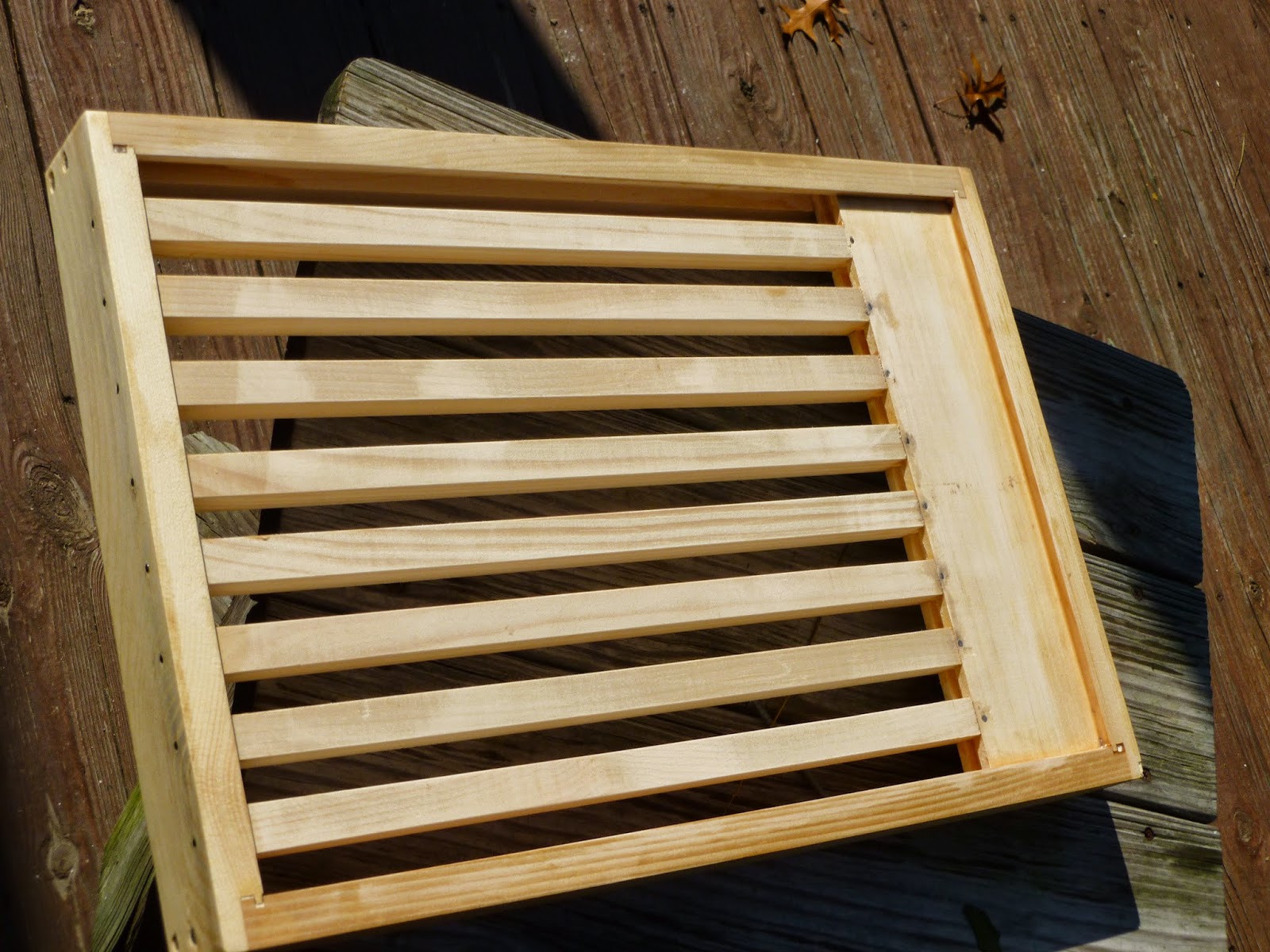
*Added a slatted bottom board which allows air flow, gives them a bit more leg room at the bottom and prevents cool drafts at the front door.

slatted bottom board
 
*Insulated the lid with 2" of foam board. This should help with condensation from the warm hive. (Didn't your mom always say wear a hat?)

insulation inside the lid
 
*Wrap the north and west sides of the hive with 2" foam board insulation because those are the coldest sides. The hives faces east and south and gets nice sun on those sides. We used bungee cords to hold it all in place.

insulation for north and west sides
bungee cords to hold the insulation

 
bungee cords and corner protectors
*Sit a gargolye on top of the hives to keep the lid on in case of strong winds and to warn off evil spirits. Yes for the wind, no for the spirits. A rock or brick will do just fine, you don't have to use a gargolye. We just happen to have a cast concrete gargolye named Dobie who is just perfect for the job.

Dobie keeping things under control

 
OK mother nature, bring on winter. McBees are ready!


Friday, November 7, 2014

Great Ball of Bees part 3

 
OK. This is the final part of the exciting great ball of bees story.
 
 
Just before the discovery of the ball of bees, at the recommendation of the State Bee Inspector, we had inserted 3 Apivar strips into the hive. Apivar is a pesticide used to control the varroa mite which is a real threat to a hive of bees. The strips are supposed to remain in the hive for at least 42 days. After our 2 week inspection of the hive and the discovery of a possible new queen, we patiently waited to open the hive again on the 42nd day of Apivar treatment.
 
Once again, we suit up, gather the gear and open the hive. Things look good. The top super is fuller and heavier than before. The bees are flying in and out and many are loaded with bright yellow pollen. We take pictures of each frame and rotate some from the outer edges to the middle so the bees will fill them. The bees are a bit cranky and they sting Jim several times on the wrist.
 
Moving to the bottom super we see honey, older capped brood but not much and very few eggs or larvae. This is very discouraging and we are now convinced that our first McBee hive is not going to make it through the winter. We take more pictures so we can study them later then we close up the hive.
 
Again I post to the NNJ Bee Facebook page and ask about the condition of my hive.  Within a few minutes I learn that queens slow down their egg production in the fall so the hive doesn't have so many babies to take care of. I also learn that, if bees are bringing in pollen, they are feeding it to the larvae and baby bees. My girls are doing this and it is a very good sign.
 
Later in the day I load the pictures onto the computer and take a good look at the frames and the bees. I see a couple of hive beetles, no mites, honey, brood and..... 
Queen in the middle of the picture

 
There she is! My beautiful italian queen bee is still with us and is still working hard to keep the hive together. I'm so happy that I found her in the hive! The chances of the hive surviving the winter have now increased dramatically. I'm now getting excited for honey harvesting in June.

Some thoughts on cause the ball of bees-
The same day we found the ball, the people who take care of our lawn were using a machine that pokes holes in the lawn to aerate. It is a big machine which thumps and may have vibrated the hive enough to have vibrated the queen right out the door. Seems far fetched, I know, but it is the only explanation we have so far.

Thanks for staying involved in the drama!

Next post- Getting read for winter.


Saturday, November 1, 2014

Great Ball of Bees part 2

For the next two weeks we watch the hive very closely. Everything seems fine. The girls are busy bringing in pollen and nectar. We are supplying them with sugar syrup to help them prepare for winter and they are drinking that stuff like it is going out of style.

We bought 20 pounds of sugar at the grocery store. The checkout person said "What do you do with all that sugar?" "Feed bees" we responded. "Oh" she said and then stopped talking to us.

We impatiently wait the required two weeks and then we don our jackets and veils; gather up the smoker, hive tools, and camera and head to the hive for a close inspection. We remove the top cover and the inner lid. We remove the feeding box and get to the first deep super. Everything looks fine. They are busy building out the wax cells and filling them with syrup and nectar. All 8 frames are not full but there is no lack of work being done. This makes us happy.

Capped and uncapped brood
 

Honey, brood and a drone cell in the middle

We take off the top super and begin inspecting the bottom 8 frames. Some frames are full of honey and capped brood. Others look like they have larvae in them and maybe eggs. This is very encouraging because it means the queen settled back in and continued to do her work.

Then we see this-


What is that lump among the brood cells? Back to the books and the experts so we can understand what it is and what it means. This hive has more drama than a house full of teenage girls!
 
Seems the lump is a queen cup which means the bees decided to make another queen either because the present one is hurt or missing or she just isn't productive enough. We think she is still in the hive. There are eggs and larvae which shows that she's been doing something in the last 2 weeks. since it is now mid September and winter is around the corner, it is too late to add a new queen and have her be successful enough to overwinter. We are fairly sure we are going to lose our hive.
 
Now I've been around bees long enough to know that hives don't all make it through the winter. I also know that we got our hive started later than is usual and it was a risk we were willing to take but I still feel sad thinking that I had somehow let the girls down. I'm not looking forward to having to clean out a dead hive in the spring. So it looks like the ball of bees really was a bad thing.
 
 
Next post- Ball of Bees part 3


Sunday, October 26, 2014

Great Ball of Bees

At the beginning of September I had an evening shift at work. Sometime around 6pm I had the following text conversation occurred with my husband-

j: Did you check the bees today?

me: Yup. They looked fine around noon.

j: They are flying around like crazy and seem upset. There is a ball of bees on the ground.

me: A ball of bees???

j: Yes. A baseball sized ball of bees on the ground in front of the hive. Other bees are flying around and it is getting dark out.

90314 ball of bees on the ground in front of the hive


Well, that got my attention! So, in between helping students find textbooks and classrooms, I investigated what a "ball of bees" might mean.(Sure wish I could have called my Dad!) I also posted to the Northern New Jersey Bee Association FB page to see if any of the experts were paying attention and could help.


My post did generate some comments. Many from a guy who is anti-treatment of any kind who had decided that my problem was because I had just begun treating my bees for varroa mites. Others who just comment on anything that gets posted and some actually helpful responses. People did tell me to find out what was in the ball and, if the queen was there, put her back into the hive tonight. don't leave it all until the morning.

So when I got home from work, Jim and I suited up, went to the hive with flashlights in our hands and gently poked around at the ball of bees. Sure enough, there was the queen in the middle of the pile. We scooped her up, brought her to the hive entrance and she walked right back in. About 30 minutes later, the hive was quiet and everyone was in for the night. Next morning, totally normal.

Such hive drama! The following day I called the State Bee Inspector to ask his advice. I have learned that, if you ask 2 beekeepers a question, you will get 3 right answers! The Inspector didn't know what to think but he did tell me to leave the hive alone for a couple of weeks and then do a thorough inspection, looking specifically for eggs and brood. Finding that will tell me if the queen is ok.

Correction- In an earlier post I mentioned how much the bees love the American Chestnut Tree catkins. since that post, I learned that my trees are Chinese Chestnut trees not American Chestnut. The bees love them just the same!

Next post- Two weeks later, the inspection!

Thursday, September 11, 2014

Class Trip to the Bee Hives

Twice a year my workplace closes to the public and holds a day of training, learning, food and fun, also known as SSL Staff Day. During that time, we have breakfast, meet together to learn something new or train on new equipment; have lunch; share our knowledge with workshops or other training; have a snack; have a department meeting and call it a day. We are famous for our eating!


BCC Library Staff in the meadow
This August 21st, the afternoon fun was a trip to the BCC bee hives with me. I offered this idea up, sort of as a joke, because so many of my co-workers are afraid of bees and just as many are very curious about the entire process. The boss took me up on the offer so we met at the bee hives after lunch. it was a lovely summer afternoon and a nice time of day to be outside so most people didn't mind taking a short walk. Plus, the boss said attendance at the hives was mandatory, so they all came. I had hope to be joined by the actual owner of the hives, but he was not available. I did ask his permission to go into the hives.

I opened a hive and pulled out frames which were empty of honey,nectar or brood because they had been extracted not too long ago.


frame with eggs,brood, bees & honey

empty frame
I got to show them what actual honey comb looks like and explain that the bees determined that shape by themselves and that is the shape they like to function in. I answered questions and got to tell the story of helping my father with his hives which led to more questions.


 Even the College's public relations guy, Larry, came and took pictures!


Sharing my new hobby made me realized how many of my childhood stories revolve around the bees (future blog posts formulating!)  and what an interesting childhood I had and helps explain why I have a connection to nature that many other people don't have. 


Saturday, August 30, 2014

An Inspector Calls (title borrowed from the book by J.B. Priestley)

Did you know that there are people employed to inspect and monitor bee hives? I'm not sure if every state has an apiarist but NJ has one and he is terrific. Tim Schuler  is a font of bee knowledge and is also a really nice guy. This past week he was in northeastern NJ to visit beekeepers and their hives so he stopped at my house.


Tim and his helpers talked to my husband about our hive and any problems we might be having. Then he opened the hive and checked things out. Tim did a test for varroa mites using the alcohol wash method-

Alcohol Wash Method

This method is simple, quick and quite accurate when applied to a larger number of colonies in the apiary. It doesn't require a second visit after 24 hours. The test is carried out as follows:
  • Use a wide-mouth glass jar and scoop about 300 bees (~1 cup) from the brood area. Make sure that the queen is NOT included!
  • Add 50 ml (~ 2 oz) of windshield wiper fluid (or diluted methyl hydrate, or rubbing alcohol) to the jar and shake for several minutes.
  • Remove lid and pour contents into a container covered with light metal wire-mesh screen (8 mesh/in) or a coarse sieve. Repeat.
  • Pour alcohol solution into a second container covered with cheesecloth or fine sieve. Count number of mites.  (explaination from http://www.agf.gov.bc.ca/apiculture/factsheets/222_vardetect.htm)
Varroa mites are a bee hive's worst enemy and have been since 1986. while the test may seem extreme because some bees die, a serious hive infestation can lead to the loss of the entire hive. The test can tell you just how bad your varroa problem is. Test results showed that my have has mites but just a few. Tim says every hive has mites it is just a matter of how many and how the beekeeper handles the problem. You can learn more about varroa mites, testing and treating here- http://www2.ca.uky.edu/entomology/entfacts/ef608.asp

Anyway, back to the inspection. Unfortunately, I wasn't able to be home for this event so my husband had to be the point person and remember to ask all the questions we had talked about. Tim gave my hive a good grade, told us what to do to help it survive the winter and put a sticker on the hive marking it as a NJ State inspected bee hive. The girls really liked the sticker!


Recently on some beekeeping Face Book page, that I follow there was a long thread about whether to register hives with the state. Some people choose not to register citing government intervention and big brother monitoring. Others argue that registering gives them piece of mind because registering provides the state with good statistics and other data that can result in positive honeybee legislation and early notification of trouble. Being registered cal also help when there is a complaint about your bees or when your local municipality changes the rules about having bee hives.

So, the same way that I registered my dog with the town and I have my kids vaccinated when they were babies, my bees are registered with the state. I know that I can contact Tim's office to get help any time I have a need. I know that my club (Northeast New Jersey Beekeepers Association) will invite Tim to speak and to visit hives every year. this is a good thing for my hive and for my fellow beeks' hives.

Tuesday, August 12, 2014

Bee-vangelism or spreading the word and enlisting converts

One of the dictionary definitions of "evangelism" is "a militant or crusading zeal". While I have always been a proponent of bees and beekeeping, I guess now I have become an evangelist or a Bee-vangelist! (I can hear the groans from my pun loving friends John and Roger)  My husband has also become a bee-vangelist telling everyone he knows that his wife is a beekeeper and he is right there with me, in the hive, visiting the bee supply stores and browsing the catalogs. He joined in the extracting fun at my workplace and he even thinks he can find a place for a hive or two at some of his work sites.

Our crusade worked on a colleague at my workplace as well. A professor with a strong interest in the environment and sustainability came by to learn about the extracting process. He was so excited about it, he called his wife and asked her to come by, with their teenager daughters. After some teenage reluctance, all three arrived and within a few minutes, they were all working. They uncapped frames, cranked the extractor, and stuck labels on jars. At one point, one of the girls had a drone bee walking around on her hand. Before the afternoon was over, the professor was hooked and talking about getting his own bee hive and his daughter was thinking of designs for the jar label.


My nephew in Vermont has been converted as well. His conversion came from my dad, his grandfather. My nephew and his wife are caring for their first hive this summer and we share updates. Their enthusiasm is not dampened by the shorter summer in northern Vermont or the shorter growing season. In this picture, Steve is adding a honey super and is well protected.

photo courtesy of Brianne Ragno
 
Oh, and my son-in-law is a convert too! He says he's willing to put a hive in his backyard (although he might just be trying to stay on my good side!) but his wife, my daughter, is not yet ready for that. Dogs and babies come first. 

Yup, and 2 of my high school classmates, who are also Facebook friends, have contacted me about bees and beekeeping. One of them lives in Hawaii so I'm volunteering to go visit and help Michael with his hives! I had honey from a lavender farm in Hawaii and it was exquisite!
http://www.aliikulalavender.com/p-21-lavender-honey.aspx

One more...a neighbor with a young son who has a tortoise, a lizard, a dog and is in to all sorts of outdoor sports came over recently and got very excited about the bees. Now he's borrowed my books, wants to come watch when we go into the hive again and getting educated so he can have a hive next spring.

With all the news about the importance of honeybees for our food and the collapse of bee hive colonies all over the world, I can only hope that more people catch bee-vangelism fever and become crusaders.


"Evangelism." Merriam-Webster.com. Merriam-Webster, n.d. Web. 18 July 2014. <http://www.merriam-webster.com/dictionary/evangelism>.